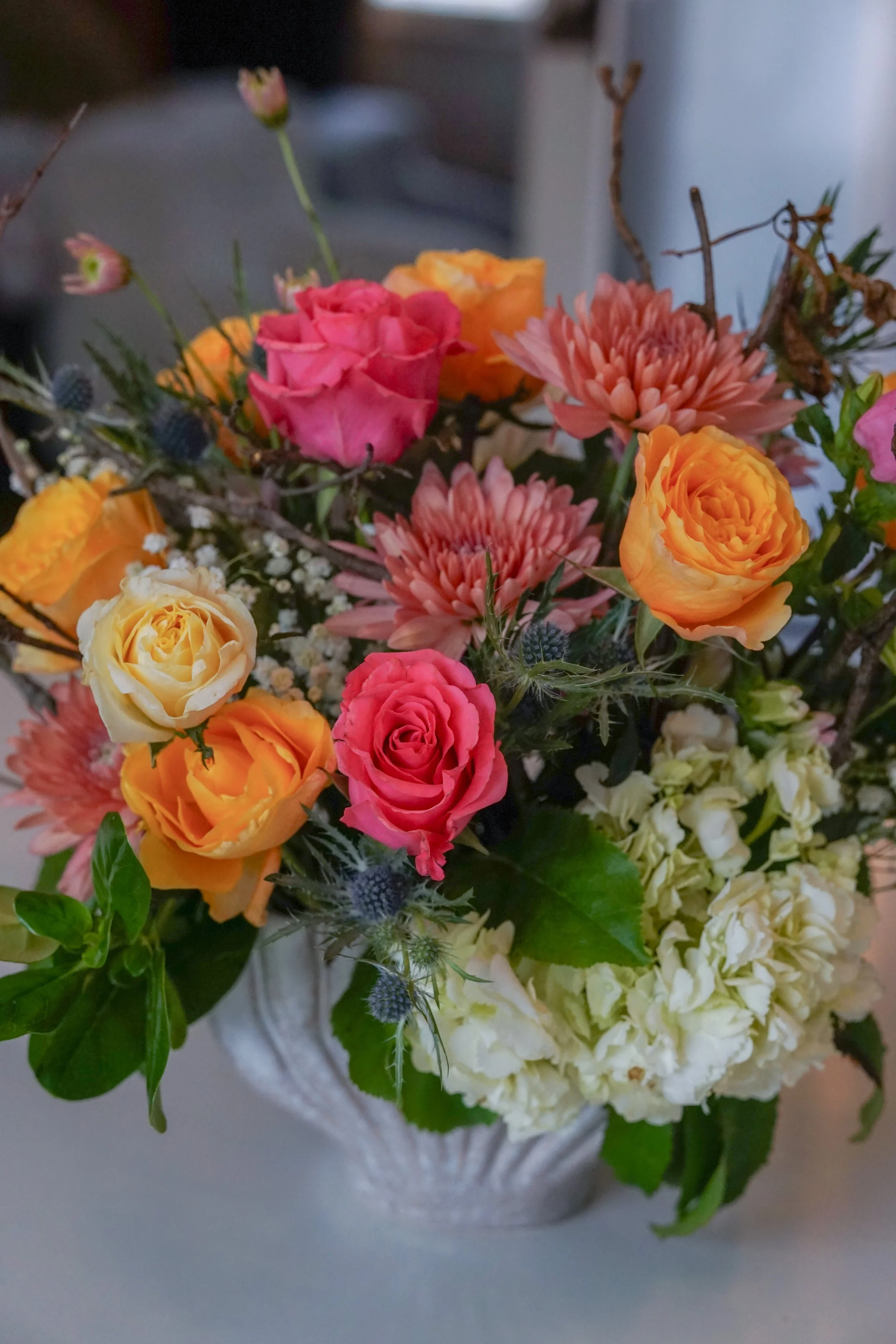
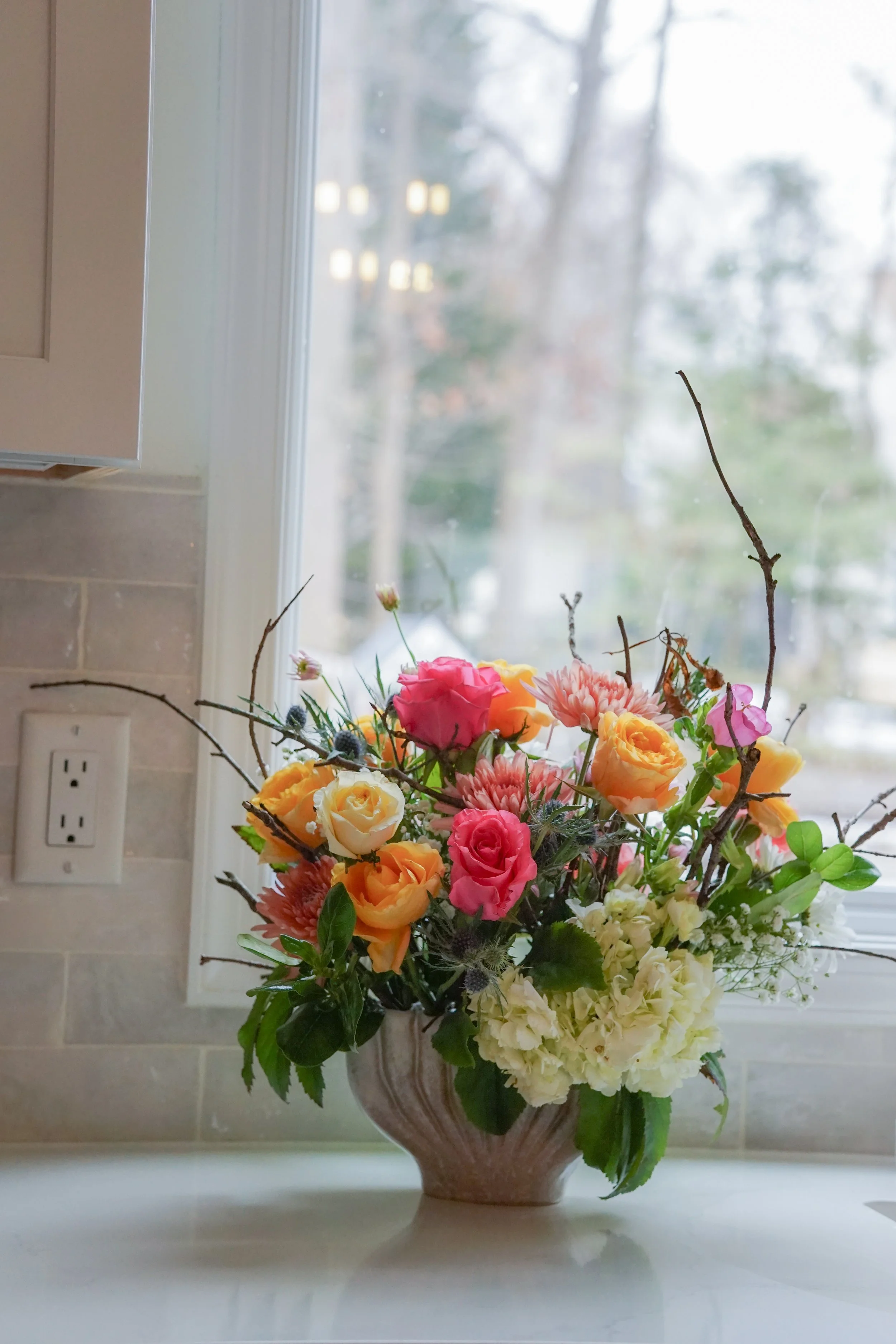
How to transform a $15 grocery store bouquet into a floral work of art
Another installment in the Floral Notes + Rue Noelle collaboration
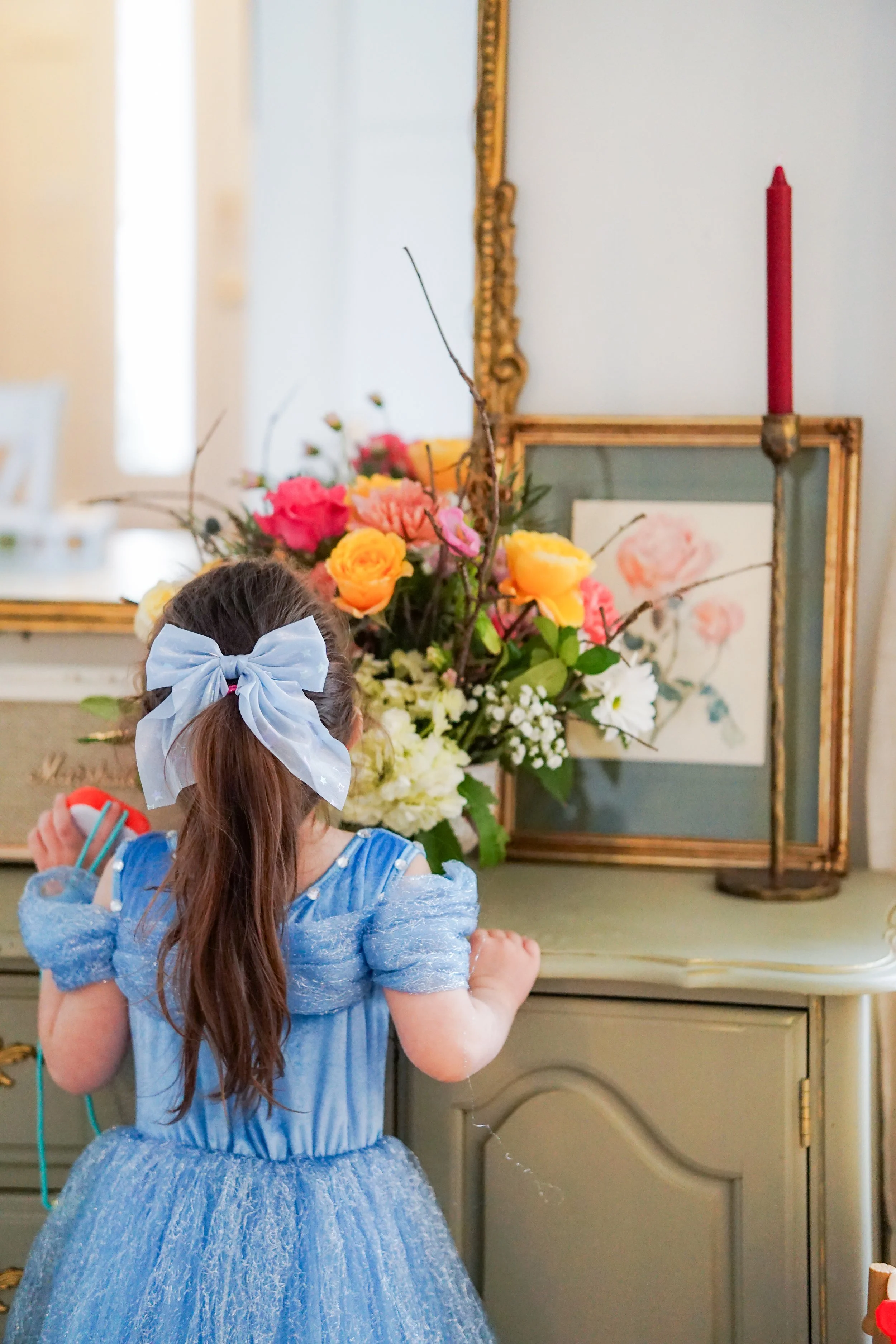
On the last day of my mother-in-law’s most recent visit, my family ramped up our last minute requests.
My mother-in-law, Maureen Christmas, is a professional floral designer based in Massachusetts with a long list of accolades and credentials. She owns a company called Floral Notes and travels the world to share her knowledge and expertise. When I first started Rue Noelle, I dreamed of partnering with her occasionally to bring her expertise to myself and you all, teaching us some basic tips & tricks to elevate our at-home flower arranging and creativity. We did our first collaboration over the holidays (a gorgeous chandelier greenery that you could adapt for any season!) and we’re back with another piece.
Back to Maureen’s most recent visit. You’d think I’d have the foresight to plan out an in-person floral collaboration. Of course, I did not, and we found ourselves on the last day of her visit, cramming in things we’d been thinking about. Maureen found herself doing crafts, baking desserts with Nellie, sewing repairs on a new princess dress… and then from me, a final and big ask.
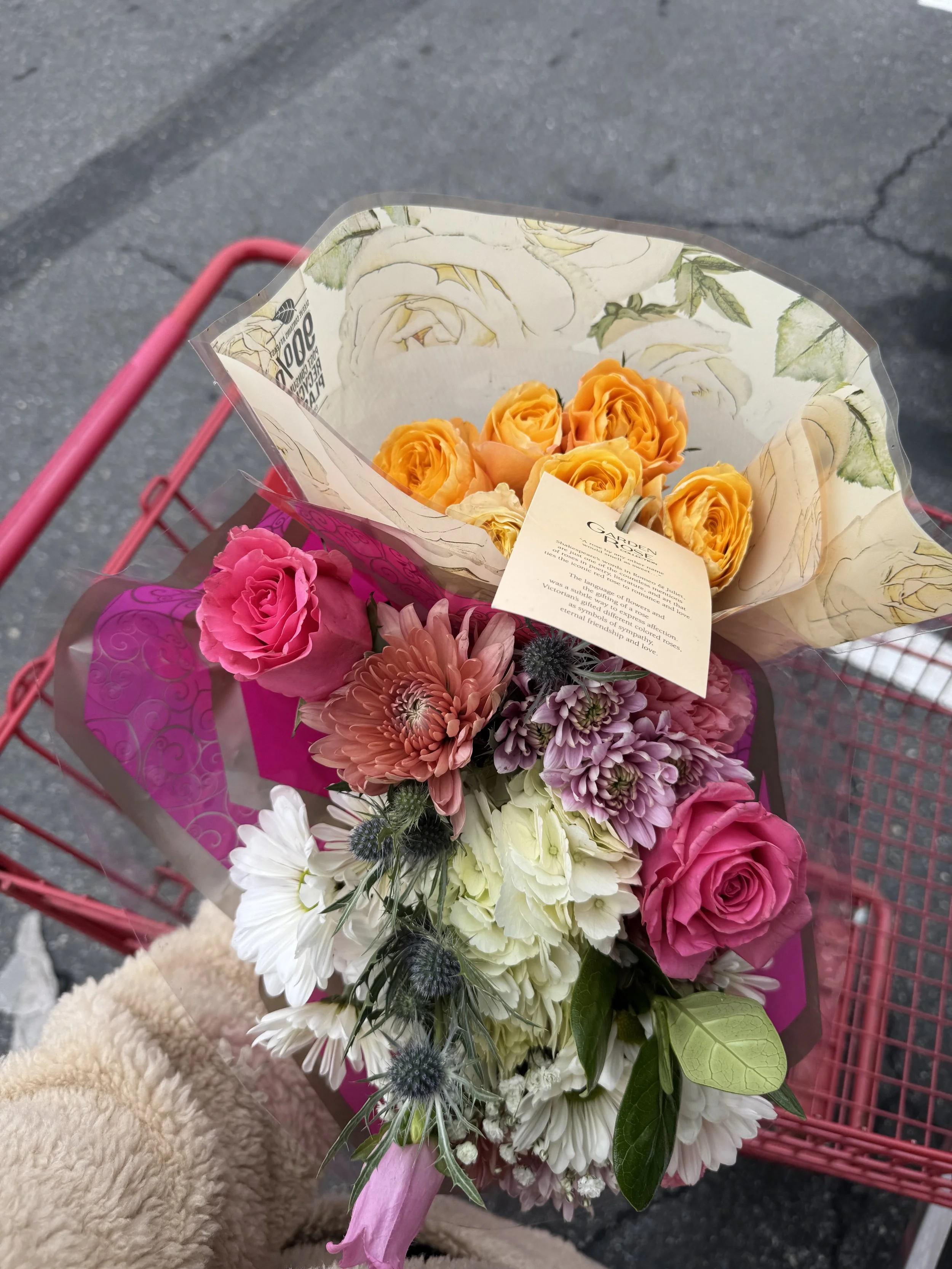
I’d escaped to Trader Joes that evening and inspiration hit me right as I walked in the doors. The flower section is the first thing you see. We love grabbing flowers from Trader Joes—they have fun options at reasonable prices. I picked two bouquets, one of those pre-made bouquets with lots of flowers as well as a bouquet of yellow roses—totalling somewhere between $15 - $20, to bring home for a last minute ask of Maureen.
My idea? How many times do we grab a grocery-store bouquet, but not quite know what to do with it other than trim the ends and stick them in a vase? Sure, they look pretty good as-is, but there must be a way to elevate these into a more artful arrangement. My vision was to have Maureen show me how a professional floral designer would transform a grocery store bouquet into a floral masterpiece at home.
Luckily, Maureen was more than up for it. The arrangement became a full family activity and I learned a lot. Below I’ll outline my observations of her process and the tips and tricks I picked up from this exercise. This could be timely heading into Easter weekend for some beautiful spring arrangements!
How to Transform a $15 Grocery Store Bouquet into a Floral Work of Art
Floral arrangement designed by: Maureen Christmas, AIFD, CFD, EMC, of Floral Notes
Observed, written and photographed by: Shannon Christmas of Noelle, L.L.C.
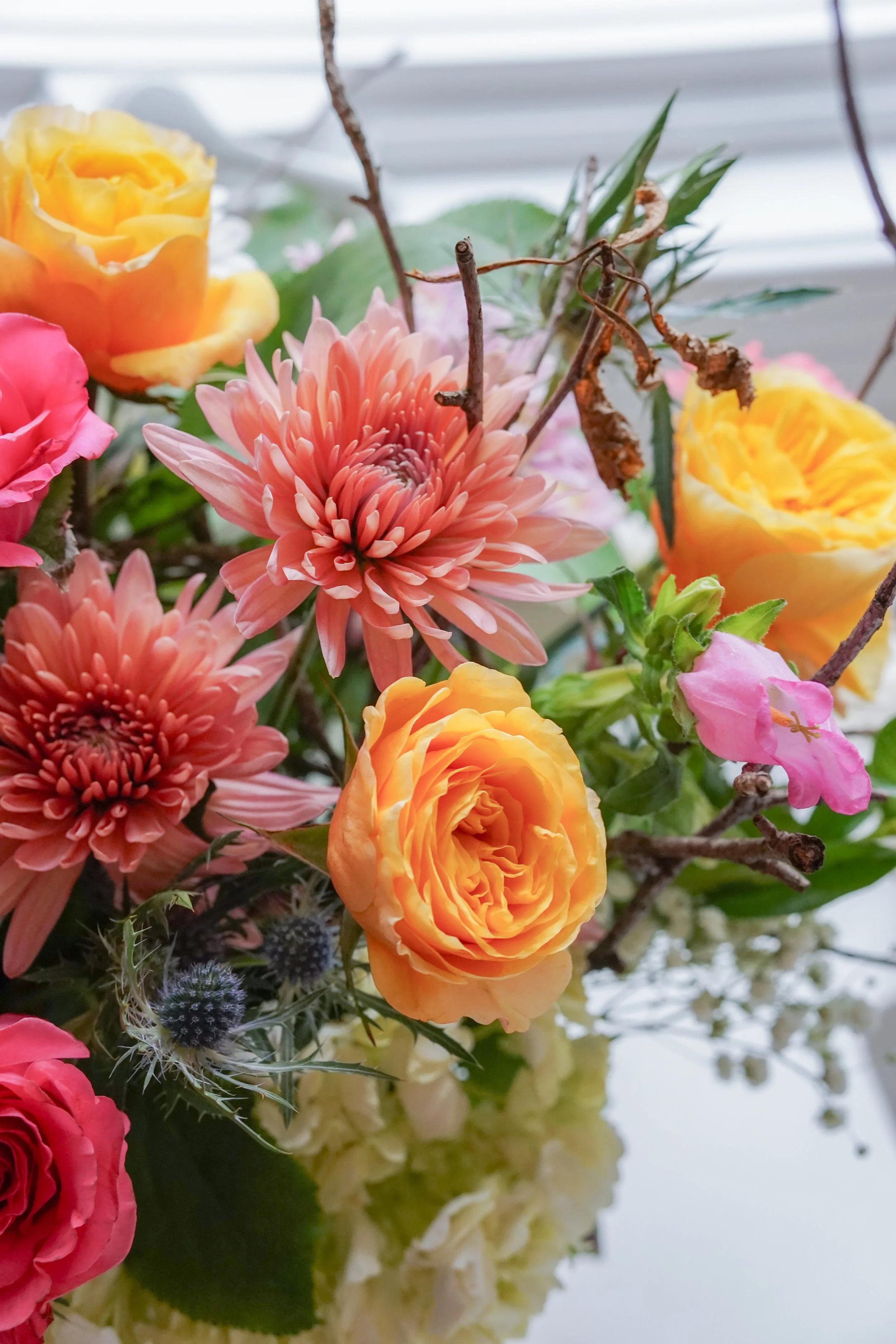
On a chilly mid-February day, I got home from Trader Joe’s and plopped a pre-built flower bouquet and a bouquet of yellow roses on the counter in front of my mother-in-law. “Maureen… could you transform this into something beautiful?” I asked. All she would have access to was our limited supply of floral tools, our backyard, and these bouquets (which in total I think were somewhere between $15 - $20). Maureen was more than up to it.
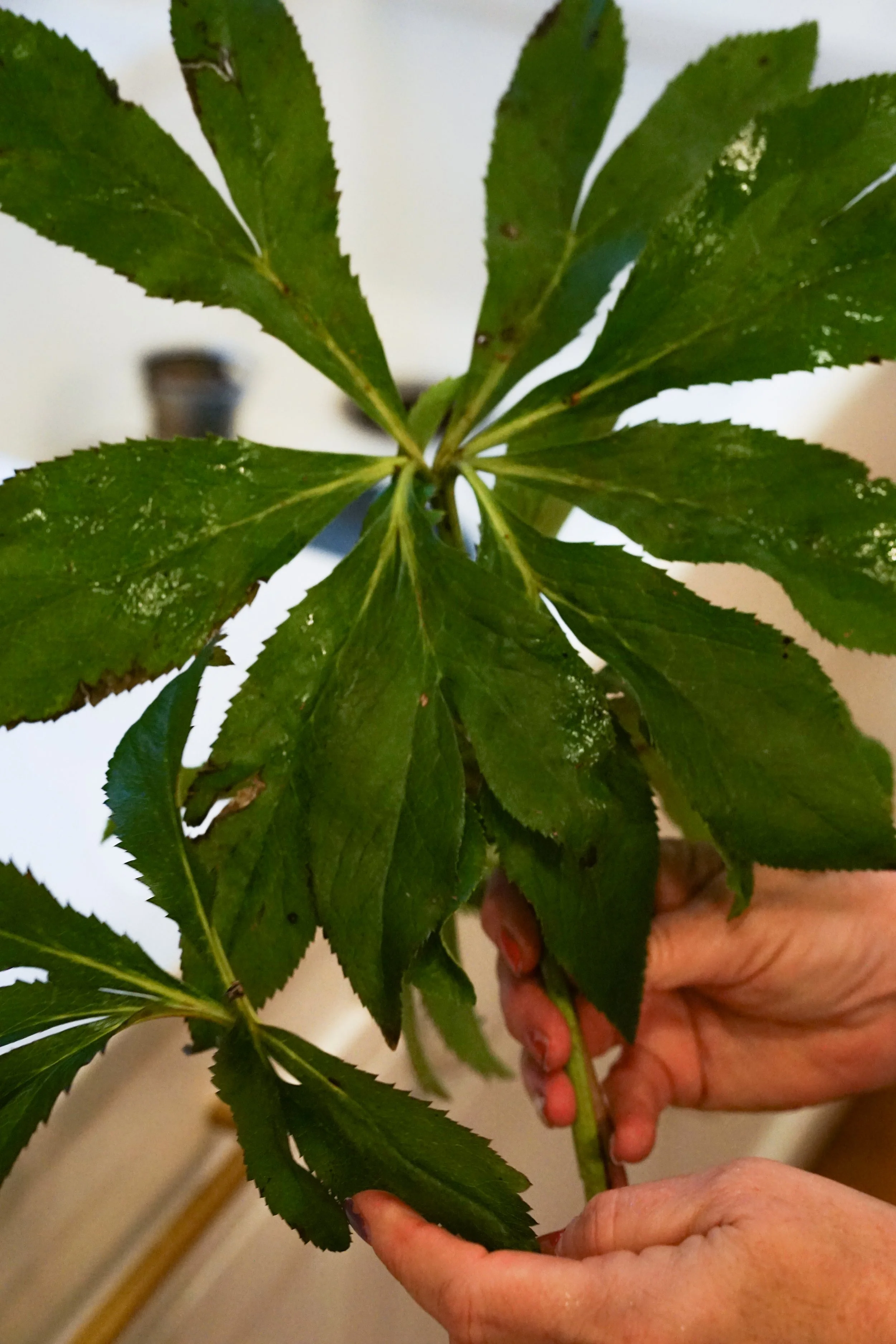
The first thing she did, before getting the bouquets into water right away, was get her shoes on and march outside. The kids and I watched as she strolled around the backyard, examining greens and picking things up off of the ground. She came back inside with a collection of sticks in various shapes and lengths, and hellebore greens—most showing the signs of the seasons, with a mixture of green and browning parts.
Major Observation # 1: Embrace the Seasons
When we bring flowers inside, we are reflecting the outdoors. Maureen’s first point was that it’s okay if not every piece going into an arrangement is perfect, in fact, imperfection adds to the arrangement. You’re reflecting what you’re seeing outside, bringing true nature inside. I absolutely love this tip. This simple shift in perspective can shape the way you see the greenery and nature in your own backyard, and how you can incorporate it into arrangements. Plus, the obvious life lessons in finding beauty and meaning in imperfection.
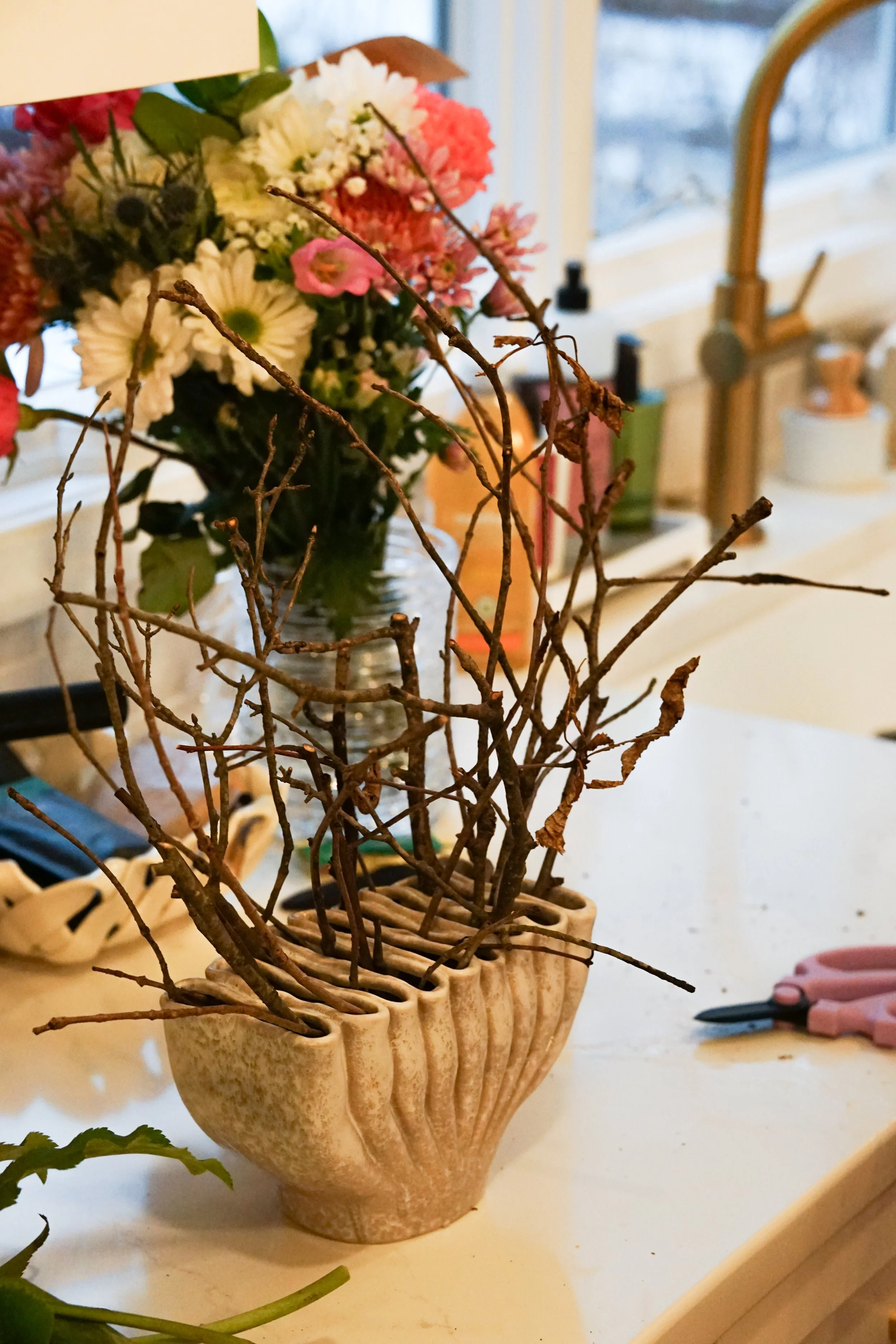
The next thing Maureen did was search our hall cabinet for a suitable vase. We happened to have one that is filled with slots, allowing for easier arranging. You can use any vessel, though, and use other tools to add structure.
Major Observation # 2: Create a Structure
Creating a structural base for your arrangement is key. You’re giving your flowers and greens a place to rest, a mechanism for you to more easily execute a beautiful design. With this arrangement, Maureen achieved her structure in two ways: 1 - the built-in slots in the vase, and 2: the sticks she brought in from outside. While I half chased my kids around and half observed, she placed the sticks throughout the vase, intertwining them to create an interesting shape with plenty of resting space for flowers to-come.
Other tools you can use to add structure:
Flower Frogs: these tools come in many shapes and sizes and sit at the bottom of a vase. They have protruding spikes that pierce the bottom of stems, allowing them to stand up in your vase. The tool is a little scary when you have tiny children—we keep ours in a very high-up cabinet—but it’s super useful when we pull it out.
Wire cages (we have a plastic one too): another item to put into your vase, allowing you to place flowers a little more intentionally without leaning.
You might have seen or heard of floral foam. Maureen is great about eco-friendly options so this isn’t the top of the list—it’s single-use and non-biodegradable (it breaks down into microplastics, ick)—but certainly works if you have nothing else.
After creating her structural base, the fun begins! Both of my toddlers climbed into their towers to help Maureen with flower placement. This was so much fun to watch. Maureen talked me through what she was doing and a lot of technical concepts and practices came my way. Here’s what I took away:
Flower Arranging Observations
Think about your colors! Maureen was very glad I had bought the yellow roses. Without these, the arrangement might have been a little bland. I remember hearing a tip from florist Sarah Raven last year to use when picking colors: “you want a bride, bridesmaids, and wedding crasher.” This basically means, you want to have some similar colors that complement each other, but also something that contrasts and brings everything to life. The yellow roses did this for us.
Trim flower stems at an angle as you go, and maintain some greenery. I remember sometimes stripping flower stems of all of their leaves before adding to a vase. Not necessary! You can remove some, but leave some too. Maureen recommends removing any leaves from stems that would end up underwater, or that look untidy. Leave a couple of leaves near the top of the stem—they’ll act as little pumps, bringing water up the stem.
Maureen would trim each flower as she added it to the arrangement, so that she could eyeball where she wanted it and trim the appropriate amount off. Make sure to trim the stems at an angle, too, to prevent the stem from falling flat on the bottom of the vase, unable to take in as much water. Think about kids drink cups whose straws are angled so that they can get that last little bit of water.
“Arrange in 3s” - create triangles. This tip has paid me major dividends already and is a great place to start. Pick 3 of the same flower and start placing them. Can you draw a triangle between the three? The triangles can be different shapes and sizes, close together or far apart, but avoid equilateral triangles (equal length sides).
Aim to have flowers of the same type on different eye planes. This is a continuation from the triangles tip. If you can draw a triangle between 3 flowers, and each is on a different horizontal and vertical plane, you’ve done great and created something interesting for the eye.
“Put the money in the front”. Think about where your arrangement will live. Put most of the florals into the side of the design that will be most viewed. If the arrangement will be seen at multiple angles, make sure the back still looks nice; maybe add more foliage to the back side so that it’s still a complete design for those moments you’ll see it from another angle.
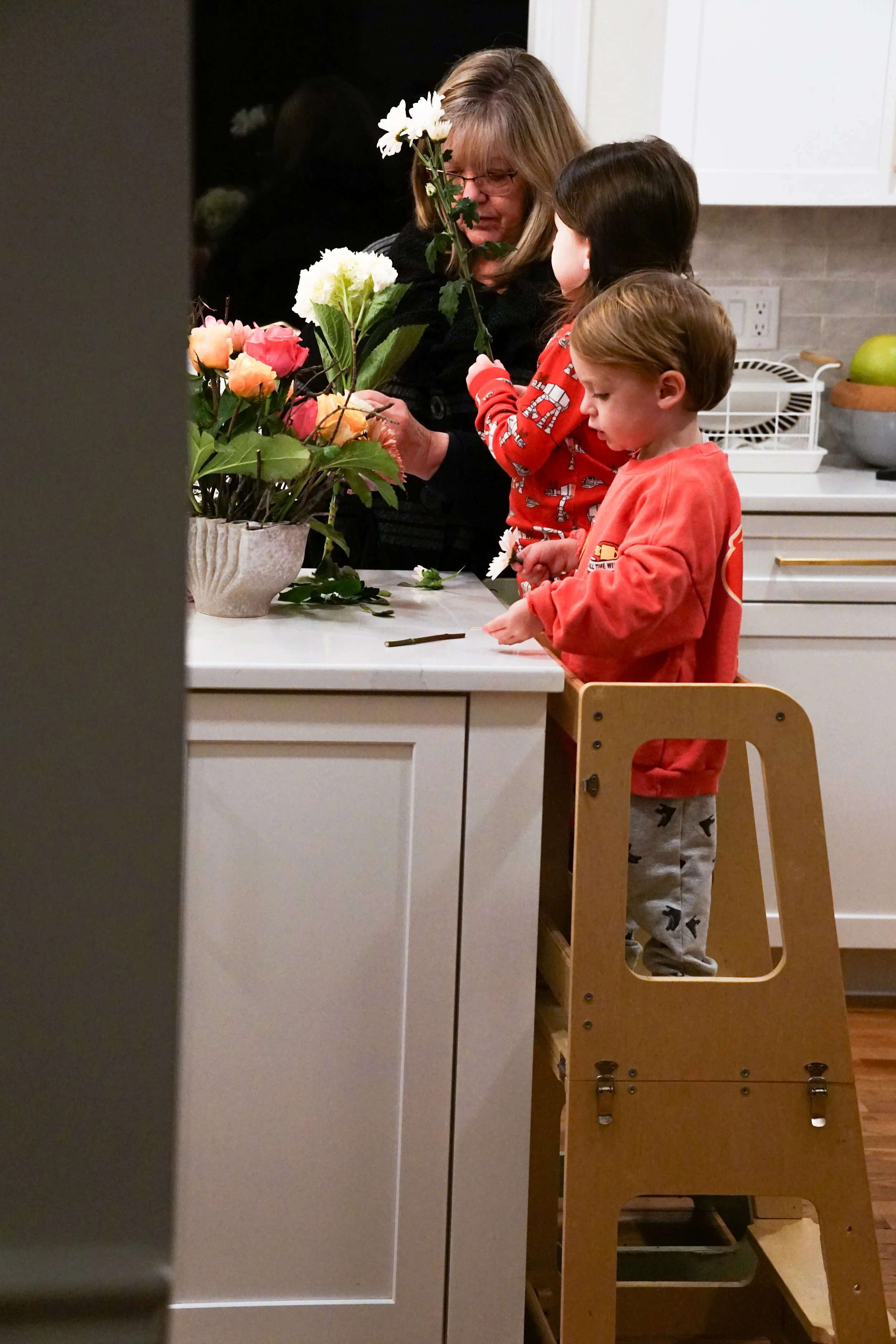
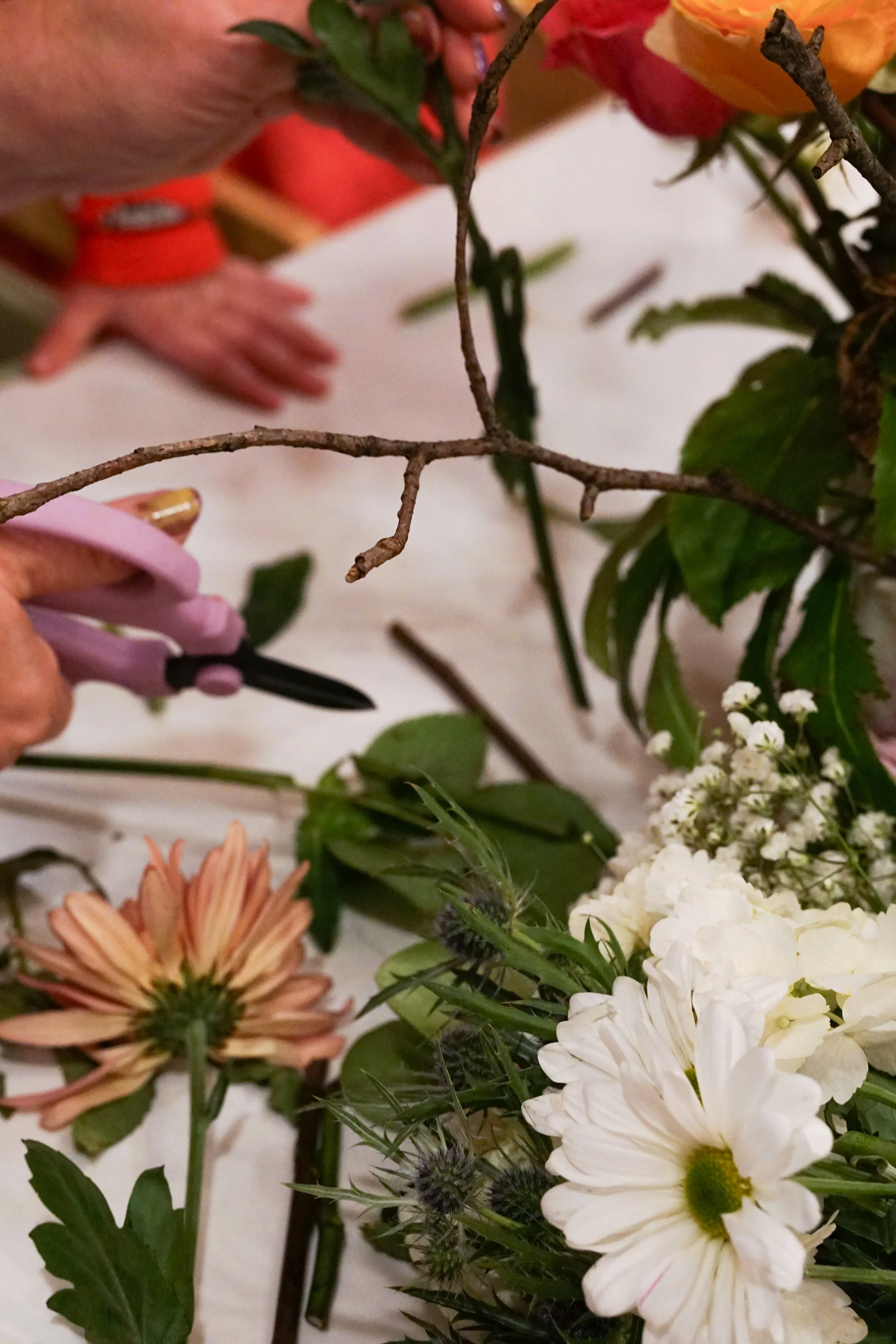
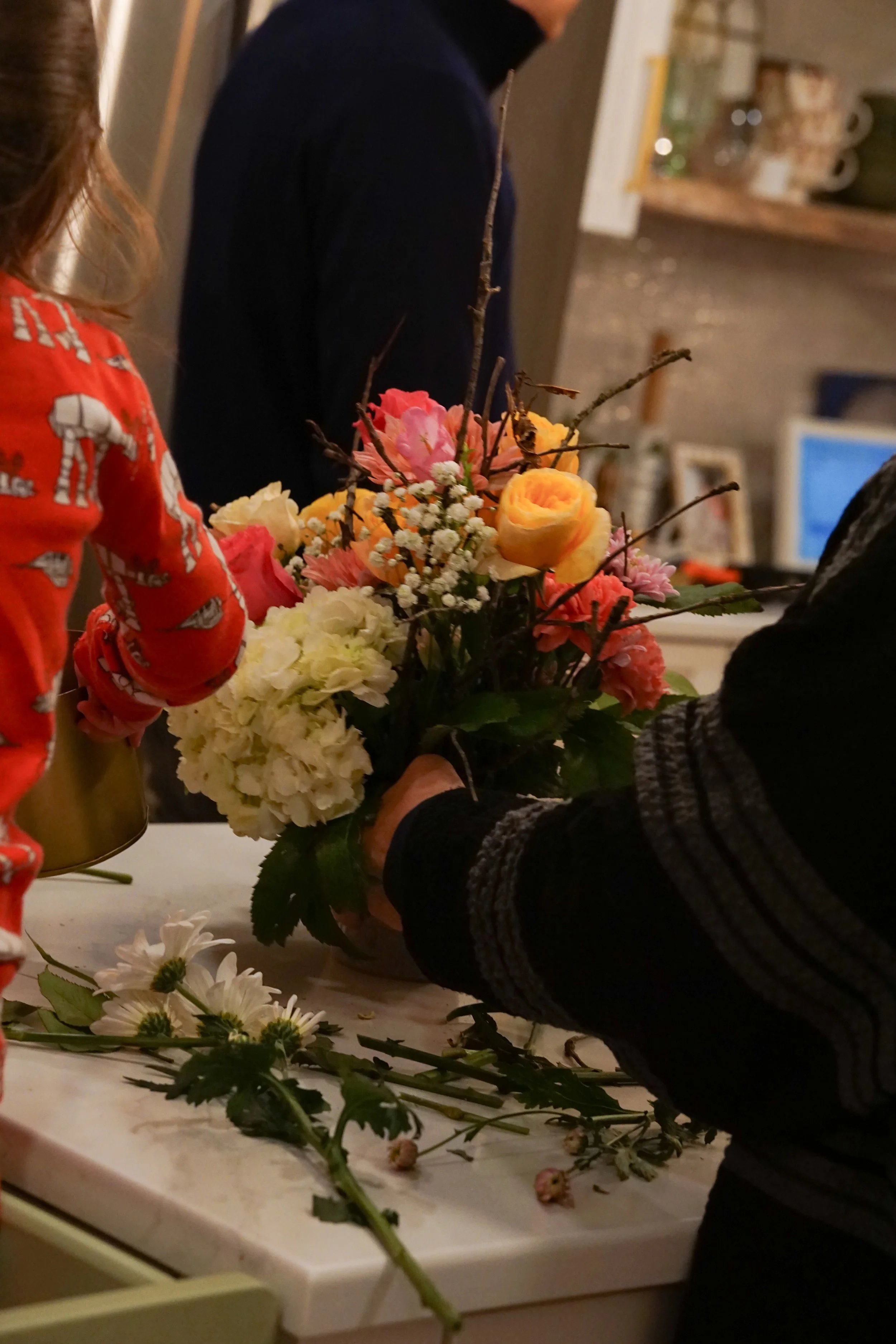
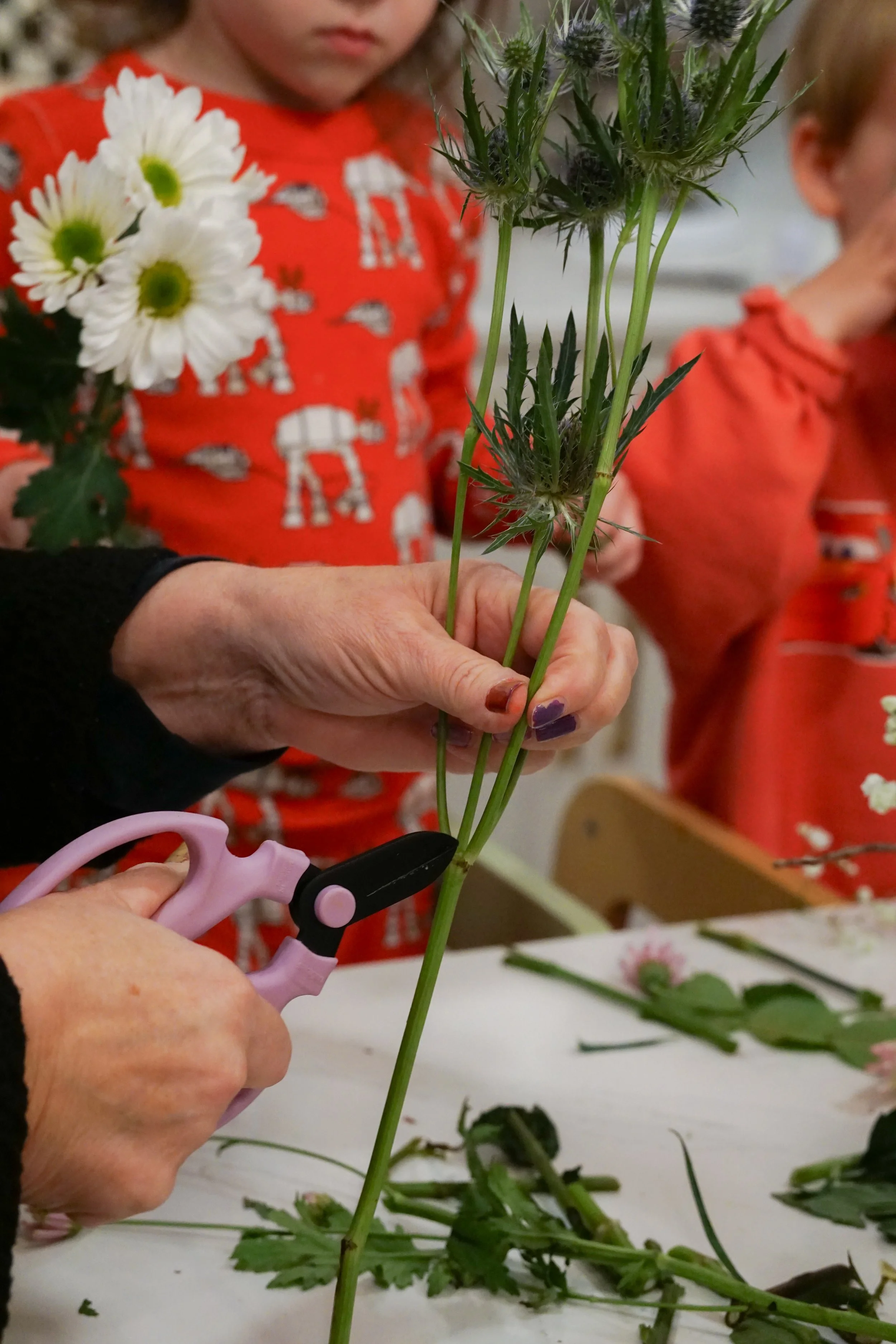
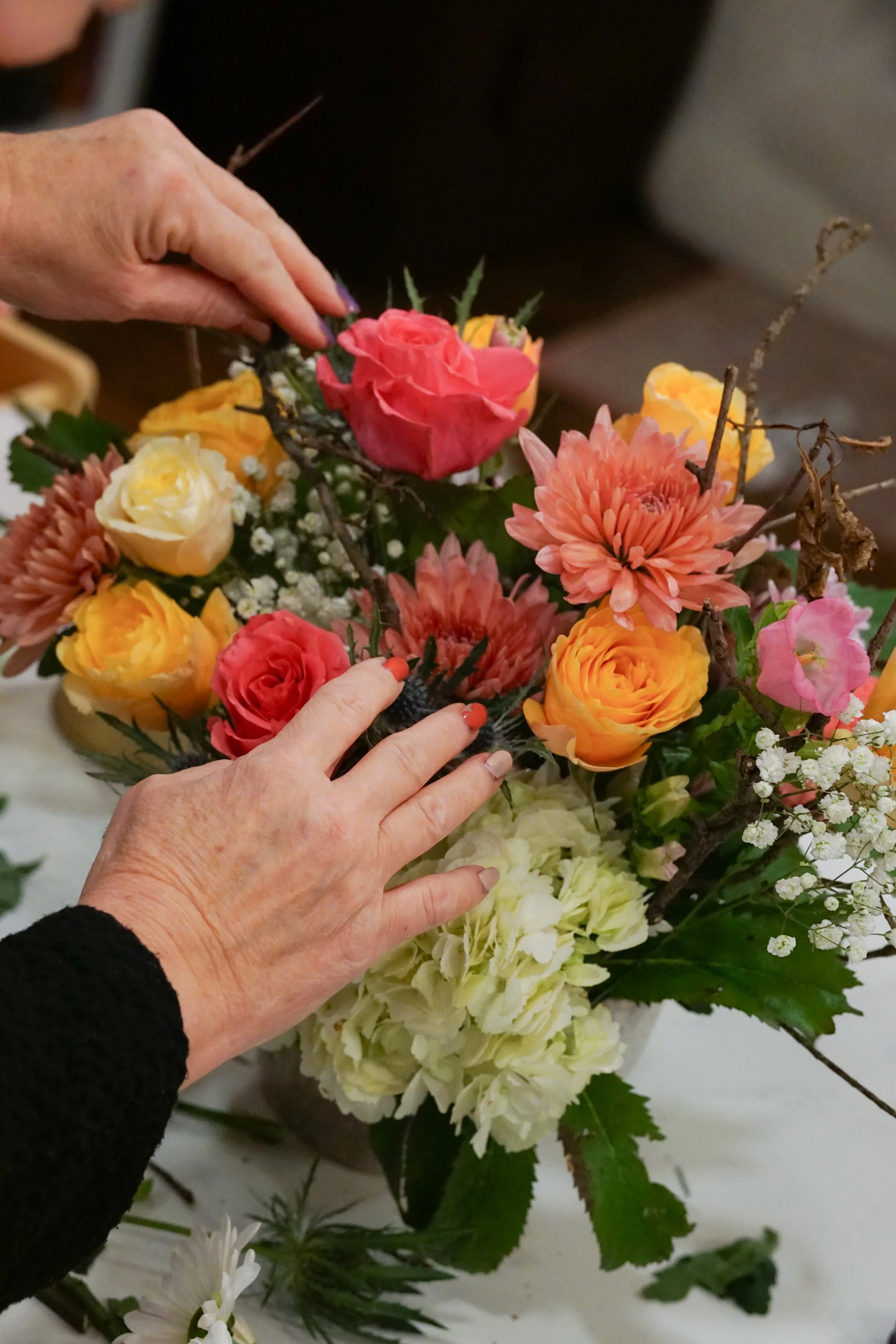
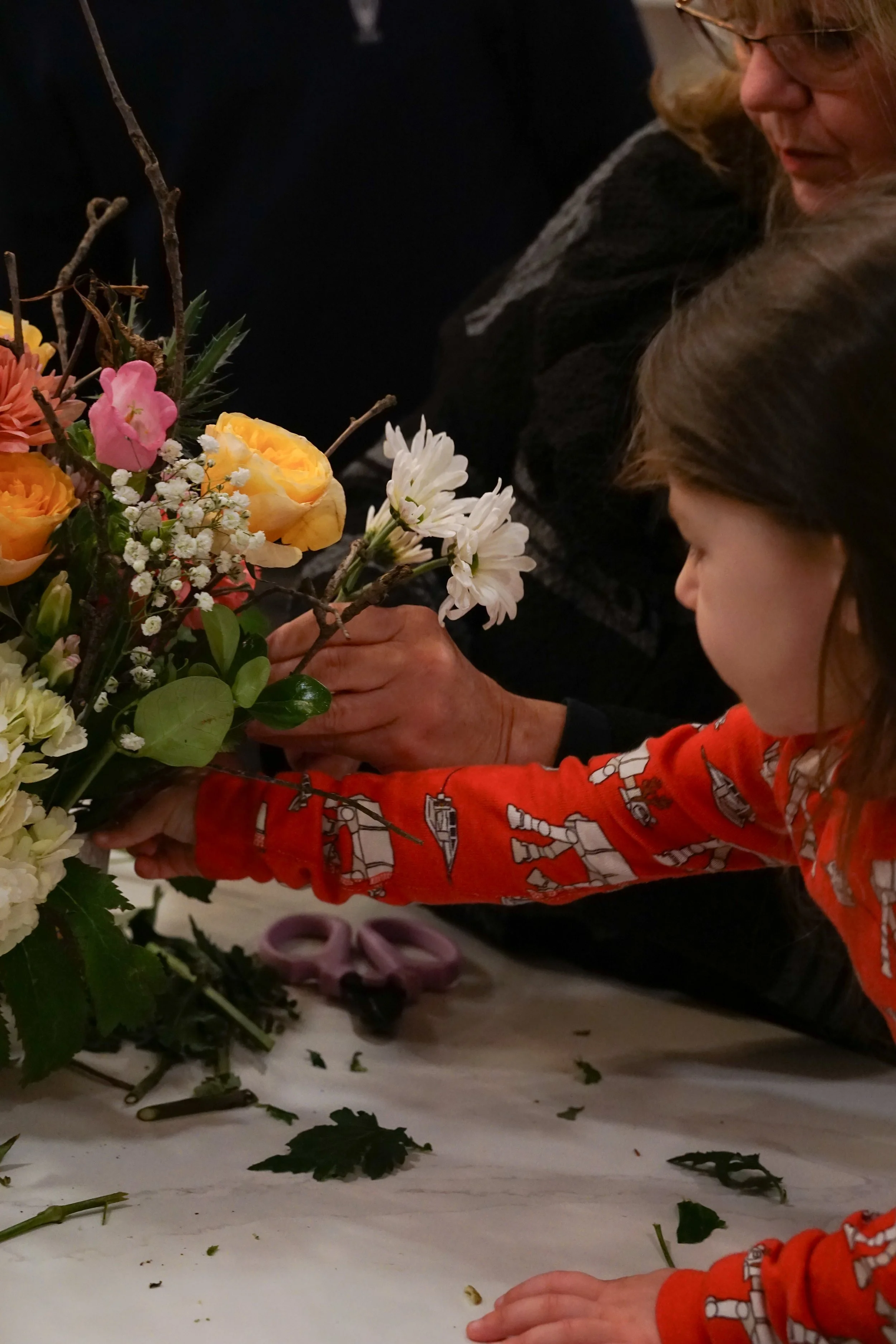
Obviously, Maureen’s extensive knowledge and experience take over. She knows what she’s doing, how to place things, and what looks good. She placed the hellebore greens from our backyard near the bottom of the arrangement.
The above tips can help those of us who aren’t professionals practice and start to build something new. We can take our time, try something, rearrange it, try something else. Adjust the arrangement as you go, stepping back to see where there might be a gap or to shift something around.
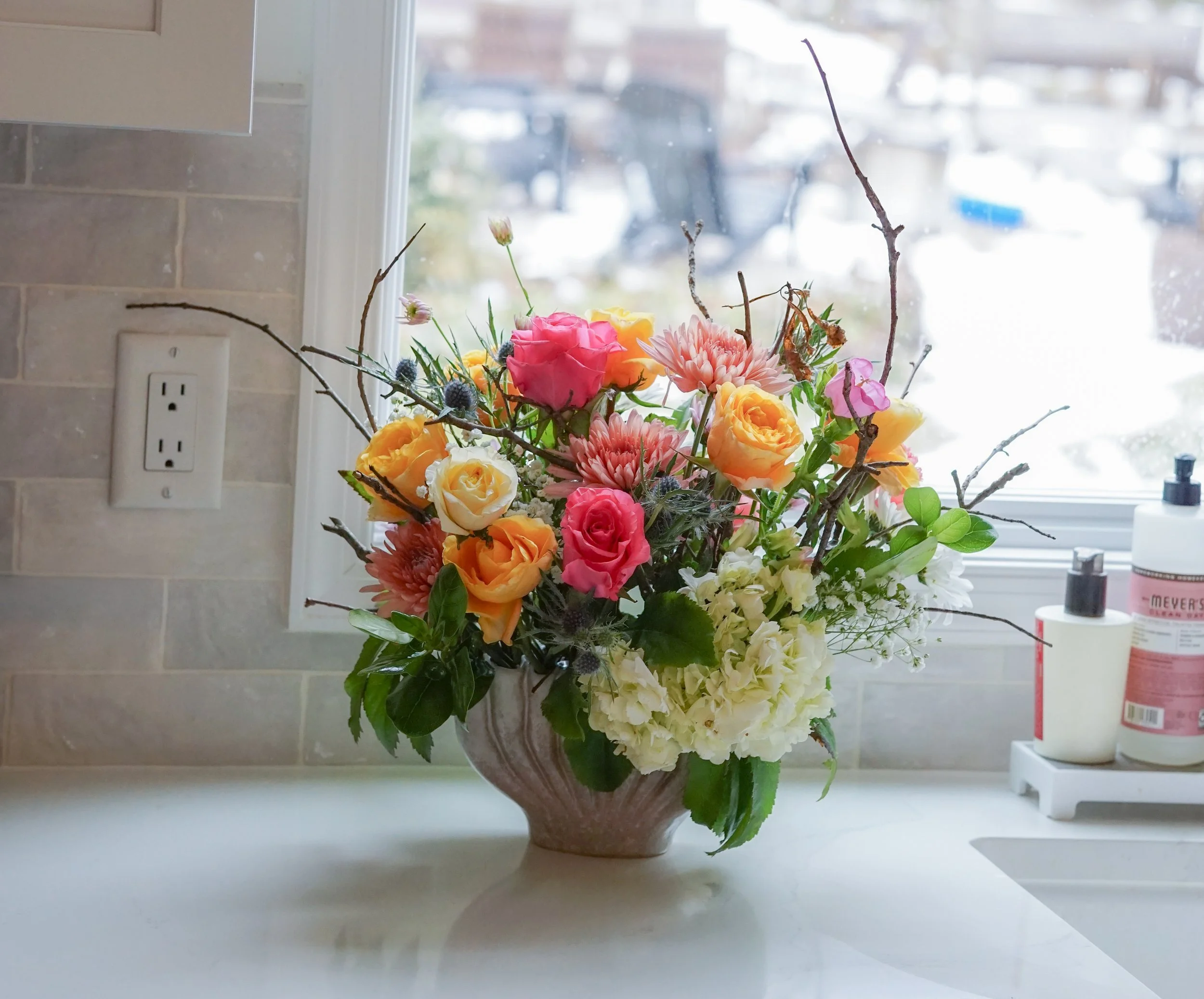
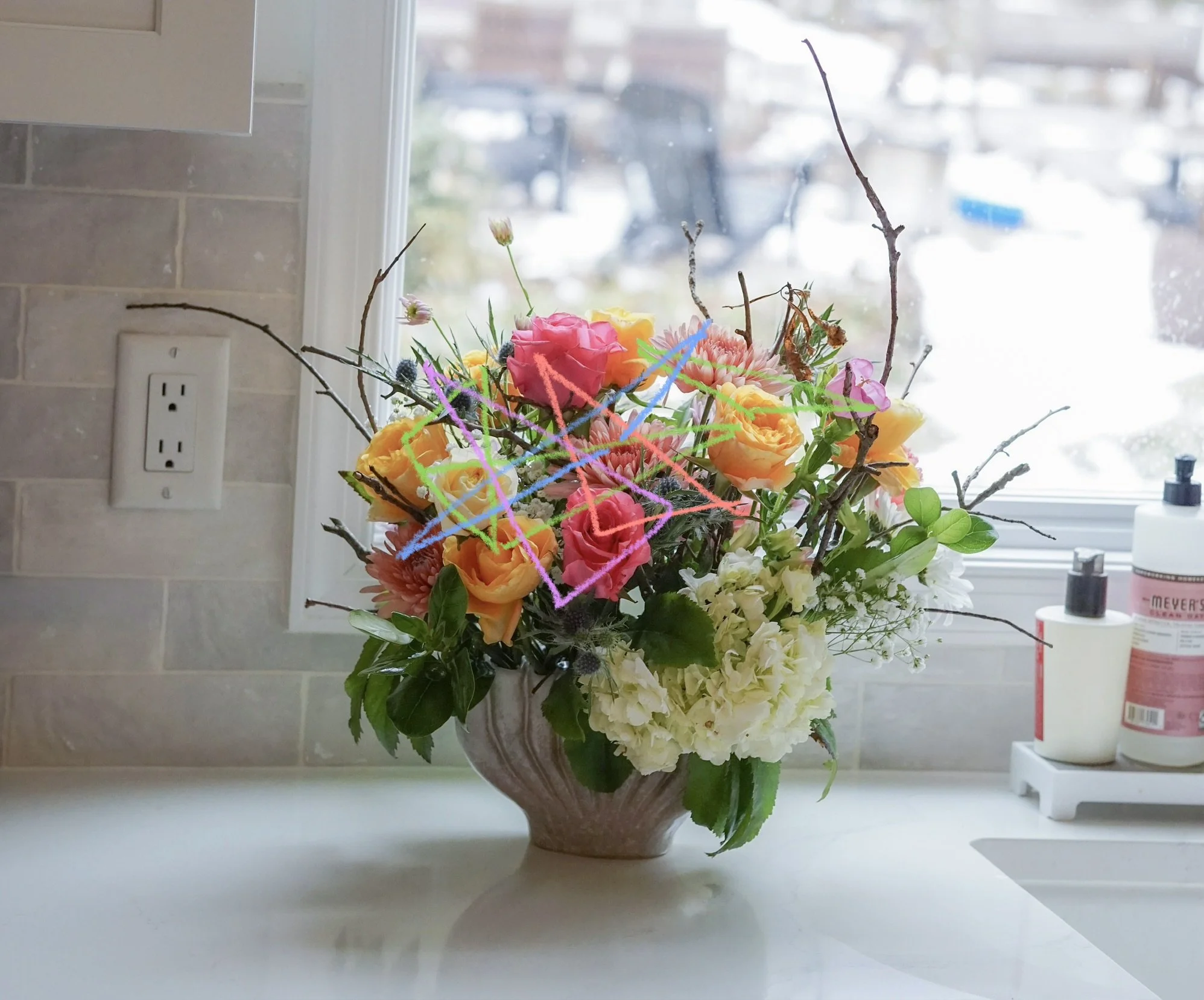
Notice the placement of flower types on different horizontal and vertical planes, as well as the various triangle shapes we are able to see
After you’re done — there’s maintenance. Maureen is also a fan of Trader Joes, but as a professional florist, she gets flowers for her arrangements directly from flower markets. Market flowers are likely to last longer due to a number of factors. But our grocery-store bouquet arrangements still have a good life ahead, especially with good maintenance!
Maintaining Your Arrangement
Water, and think about conditioning! Yay, a new flower term! I learned from Maureen that different flower varieties like different amounts of water—the conditioning of the flower. So, don’t just fill your vase to the tippity top with water. You don’t want the water line to drop below any stems, because the flowers will obviously wilt much faster, but you also don’t need a full vase. As you get to know your flowers, you’ll learn more intiutively what they need. Some flowers might only need a couple of inches of water, but some need more. Google can help those of us non-flower professionals while we’re learning. For an arrangement with multiple flower types, add enough water to meet the thirstiest stems’ needs; in this arrangement, the hydrangea needed the most water so Maureen added enough water to meet that flower’s needs.
You can also spritz water on certain blooms to keep them perky, for example, hydrangeas.
When greens and blooms do start to droop, pull them and adjust your arrangement. Maureen instructed me to spritz the hydrangea in this arrangement when she was gone to see if it might perk up, but if not, to remove it immediately. You can then shift things around to cover any gaps, bearing in mind the arranging tips from above.
I hope you picked up a few useful tips. Thank you of course to Maureen for being the brains and teacher behind this experiment. We are so grateful to learn from you and bring a little more beauty into our homes!